
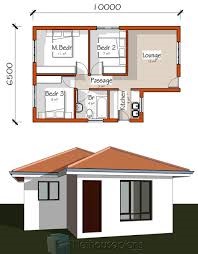
Small house plans have become a popular choice for homeowners who value simplicity, sustainability, and smart design. With the rising cost of construction and land, more people are embracing compact homes that use space efficiently without sacrificing comfort or style. These homes are ideal for young families, retirees, and anyone seeking a minimalist lifestyle that focuses on quality rather than quantity.
Modern small home designs blend functionality with aesthetic appeal — featuring open layouts, multifunctional spaces, and creative storage solutions. From cozy cottages to sleek, modern cubes, small house plans are proof that “less” truly can mean “more.”
Popular Types of Small House Plans
Single-Story Homes – Perfect for accessibility and simplicity, ideal for all age groups.
Two-Bedroom Small Houses – Provide the perfect balance of space and affordability.
Tiny Homes – Ultra-compact designs that emphasize efficiency and mobility.
Modern Minimalist Houses – Use clean lines, open spaces, and neutral colors for a fresh, airy feel.
Cottage-Style Homes – Blend charm and functionality, offering cozy living with a rustic touch.
Key Features of Well-Designed Small Homes
- Open-Concept Layouts for seamless flow between rooms.
- Smart Storage, such as built-in shelves and under-stair compartments.
- Natural Lighting to create the illusion of space.
- Multi-Purpose Rooms that serve dual functions.
- Outdoor Extensions like patios or decks to expand living space.
Small house plans represent a revolution in the way we think about home design. Instead of focusing on size, today’s architects and homeowners prioritize functionality, creativity, and lifestyle needs. A well-designed small home proves that comfort and luxury don’t depend on square footage — they depend on thoughtful planning, efficient layouts, and personalized details.
One of the biggest advantages of small house plans is affordability. With lower construction and maintenance costs, they make homeownership accessible to more people. Smaller spaces also mean reduced energy consumption and fewer materials, making these homes eco-friendly and sustainable. As climate change and economic challenges continue to shape modern living, compact homes are becoming symbols of intelligent, responsible living.
Design innovation plays a crucial role in maximizing small spaces. Architects use open-plan living areas, minimal partition walls, and large windows to make rooms feel bigger and brighter. Multifunctional furniture, foldable tables, and vertical storage help homeowners get the most out of every inch. Even small outdoor spaces can be transformed into relaxing retreats or functional gardens, extending the usable area of the home.
Another appealing aspect of small house plans is their versatility. Whether you’re looking for a starter home, a vacation cottage, or a retirement retreat, compact layouts can be tailored to fit any lifestyle. With modular and prefabricated options available online, designing or purchasing a small home plan PDF has never been easier.
Technology has also made it possible to visualize small house designs before construction. 3D modeling tools allow homeowners to take virtual tours, adjust layouts, and experiment with color schemes in real time. This digital design process ensures that every inch of space is optimized before the first brick is laid.
Ultimately, small house plans reflect a modern mindset — one that values simplicity, comfort, and sustainability. They remind us that home isn’t defined by size, but by the feelings it inspires. Whether it’s a compact city apartment or a cozy countryside bungalow, a small house designed with purpose can provide all the beauty and functionality of a larger home — with the added benefit of financial freedom and a lighter environmental footprint.
So, if you dream of building a space that’s uniquely yours, consider a small house plan — where every detail counts, and every corner tells a story of creativity and smart living.
