
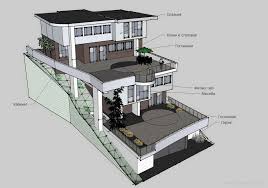
Designing a house on sloped land presents both challenges and opportunities. Unlike flat sites, sloped terrains require thoughtful planning to ensure stability, functionality, and visual appeal. When done right, homes built on slopes can offer stunning views, natural light, and a strong connection to the surrounding landscape. Architectural creativity and engineering precision work hand in hand to transform uneven land into a comfortable and sustainable living space.
Key Considerations for Sloped Land Design
Before construction begins, a detailed site analysis is crucial. Factors such as soil type, drainage, and the degree of the slope influence the foundation design and layout. Architects often use split-level or tiered designs to adapt to the natural contours of the land. Retaining walls, stilts, or stepped foundations may be introduced to stabilize the structure while minimizing excavation. Proper water management is also vital, as rainwater runoff must be directed safely away from the home to prevent erosion or flooding.
Design Strategies for Sloped Terrain
Building on a slope opens up creative architectural possibilities. Split-level homes are popular because they follow the land’s natural incline, reducing the need for extensive grading. The upper levels often house living areas with panoramic views, while lower levels can include bedrooms, entertainment spaces, or garages. Decks, balconies, and large windows are integrated to maximize outdoor living and natural light. In addition, landscaping plays a major role — terraced gardens and stone pathways help blend the structure seamlessly into its surroundings.
A well-executed house design for sloped land turns what could be a challenge into an architectural advantage. Sloping sites often provide opportunities for creativity, breathtaking views, and a unique connection to nature that flat plots simply can’t match. The key lies in understanding the terrain and designing a home that works with the land rather than against it. By embracing the natural contours, architects can create functional, energy-efficient homes that feel both grounded and elevated.
One of the main benefits of designing for a slope is the ability to create multi-level living spaces that feel open and dynamic. Each level can serve a distinct purpose, such as private bedrooms tucked into the hillside and open living areas facing outward toward scenic views. This type of design not only enhances the homeowner’s experience but also increases property value due to its uniqueness and visual impact.
Environmentally, sloped land designs often support sustainable practices. By aligning structures with natural topography, there’s less disruption to the land, reduced soil erosion, and improved water drainage. Many modern sloped home designs also incorporate solar panels, rainwater collection systems, and natural ventilation, making them both eco-friendly and cost-effective.
Aesthetically, homes built on slopes often feature striking architectural elements — cantilevered decks, glass walls, and cascading staircases — that create harmony between structure and landscape. The design makes full use of elevation changes to frame views, invite natural light, and provide privacy without feeling confined.
Ultimately, building on sloped land requires careful collaboration between architects, engineers, and landscape designers. The result is not just a home, but a masterpiece that reflects balance, innovation, and respect for the environment. A well-planned sloped land house design offers homeowners a one-of-a-kind living experience that blends natural beauty, architectural elegance, and sustainable comfort — proving that even the most challenging landscapes can inspire truly exceptional homes.
