
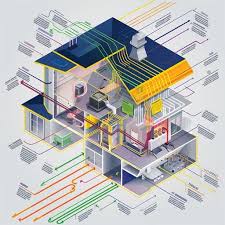
Smart home architectural layouts represent the future of modern living — a seamless blend of technology, design, and functionality. These layouts are carefully planned to integrate intelligent systems that make everyday life more convenient, efficient, and sustainable. From lighting and temperature control to home security and entertainment, every element of a smart home is designed to communicate and respond automatically to the homeowner’s preferences.
Features of Smart Home Architecture
A smart home layout goes beyond aesthetics. It is structured around interconnected systems that enhance comfort, safety, and energy efficiency. Architects design such layouts with dedicated zones for smart devices, hidden cabling, and energy hubs to ensure clean and organized installations. Features include automated lighting systems, climate control, voice-activated assistants, and smart security cameras. Some layouts even include solar panels, energy management software, and water-saving systems to support sustainable living.
Designing an Intelligent Layout
When creating a smart home architectural layout, collaboration between architects, engineers, and technology experts is essential. The floor plan must accommodate the integration of IoT (Internet of Things) devices while maintaining visual harmony and space efficiency. For example, living areas can include built-in charging ports, concealed sensors, and programmable lighting scenes. Kitchens often feature smart appliances that communicate with mobile devices, while bedrooms and bathrooms integrate comfort systems like automatic temperature adjustments and motion-based lighting. A well-planned layout ensures that technology enhances living rather than overwhelming it.
A smart home architectural layout is more than just a technological advancement — it’s a thoughtful reimagining of how we interact with our living spaces. It brings together innovation and practicality to create homes that are not only intelligent but also responsive to human needs. In a world where convenience and sustainability are top priorities, smart homes offer a glimpse into the next generation of comfortable, connected living. Every aspect, from the way lights turn on to how security systems operate, is designed to simplify life while conserving energy and resources.
One of the biggest advantages of a smart home layout is its adaptability. Unlike traditional homes, where designs are static, smart architecture evolves with the homeowner’s lifestyle. As technology advances, systems can be upgraded or reprogrammed without major renovations. This flexibility makes smart homes an ideal long-term investment, blending convenience, safety, and future-readiness under one roof.
Energy efficiency is another defining benefit. Through automated systems that monitor usage, adjust lighting based on occupancy, and regulate temperature intelligently, homeowners can significantly reduce energy consumption and utility costs. These designs also promote sustainability by optimizing renewable energy sources such as solar power and by ensuring that materials and installations are environmentally friendly.
From a design perspective, smart home layouts embrace minimalism and open concepts. Wires, devices, and control systems are subtly integrated into the architecture, maintaining a sleek and clutter-free environment. The result is a space that feels both futuristic and warm — one that prioritizes both beauty and function.
Ultimately, a smart home architectural layout embodies the evolution of domestic design. It reflects a lifestyle where technology supports well-being, convenience, and sustainability. By combining thoughtful architecture with intelligent systems, homeowners can enjoy an environment that adapts to them — anticipating needs, saving time, and creating a living experience defined by comfort, efficiency, and innovation. In this way, smart home architecture isn’t just about modern living; it’s about designing homes that think, respond, and grow with the people who live in them.
